Swiss Alps
Luxury Apartmentsin Zermatt
A car-free village beneath the Matterhorn, with year-round glacier skiing and legendary mountain restaurants.
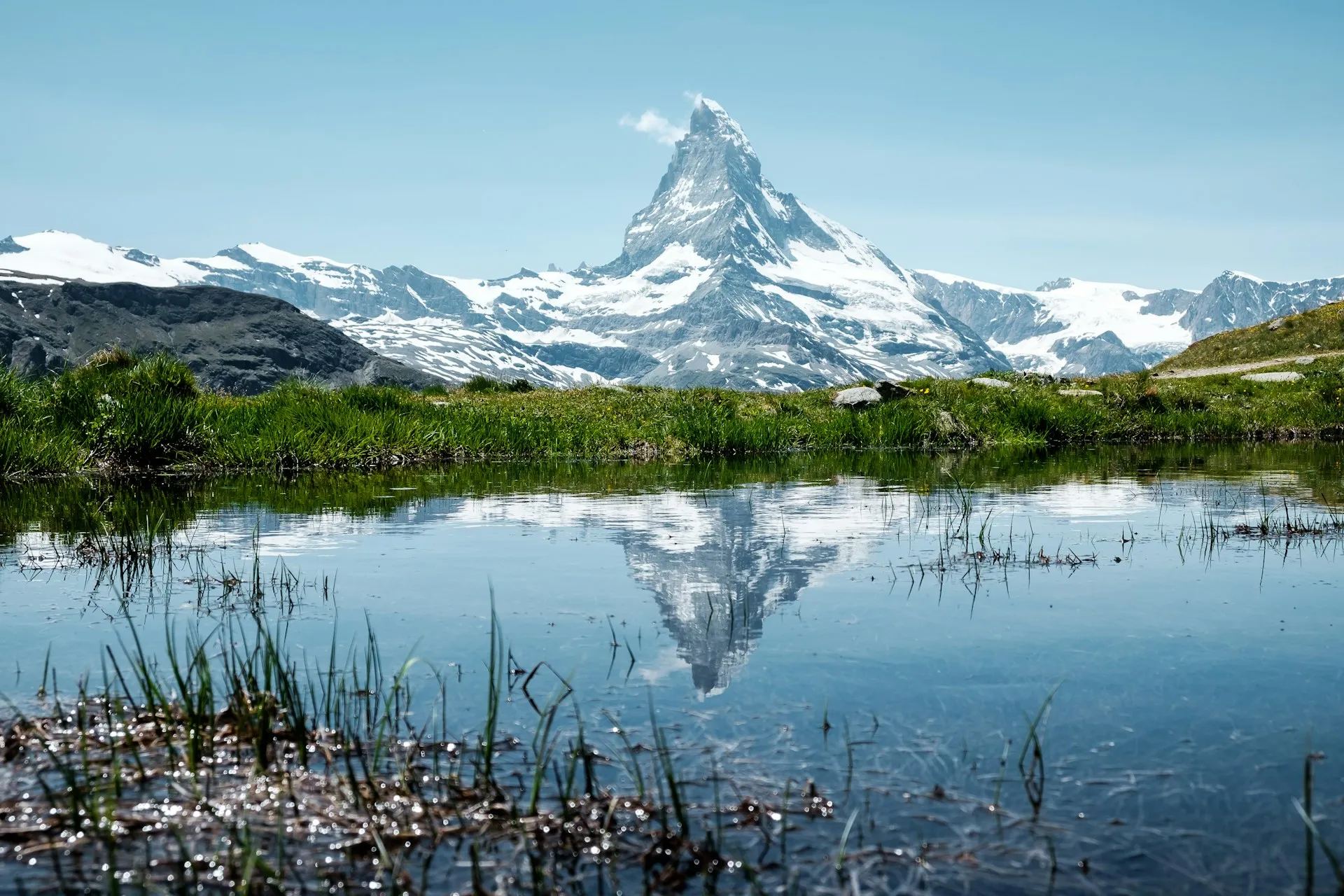
At the foot of the Matterhorn, Zermatt is a car-free village of larch chalets, historic hotels and mountain huts. Its ski area climbs to 3,883 metres and links across the border to Cervinia in Italy, with skiing on the glacier possible in every month of the year.
Few mountains are as iconic as the Matterhorn, and few villages wear their setting as gracefully as Zermatt. Lying at around 1,600 metres at the head of the Mattertal in the canton of Valais, the village has been car-free for decades: visitors arrive by train, and electric taxis and horse-drawn carriages glide along streets lined with chalets, boutiques and historic hotels. In the old quarter, sun-darkened larch granaries perched on stone discs recall the farming community that welcomed the first mountaineers in the nineteenth century.
Zermatt's ski area, the Matterhorn ski paradise, is one of the highest and most snow-sure in the Alps, with around 360 kilometres of pistes shared with Breuil-Cervinia and Valtournenche in Italy. The Matterhorn Glacier Paradise, at 3,883 metres, is the highest cable-car station in Europe and keeps the Theodul glacier open for skiing through the summer, while the Gornergrat railway, opened in 1898, climbs to one of the most spectacular viewpoints in the Alps, facing the Monte Rosa massif and its glaciers.
Beyond the slopes, Zermatt is famous for its mountain restaurants, where lunch on a sunny terrace in the hamlets of Findeln or Zum See can stretch late into the afternoon. In summer, some 400 kilometres of trails lead to glacier lakes, alpine pastures and mountain huts, and experienced climbers come from around the world to attempt the Matterhorn and the four-thousand-metre peaks around it. Whatever the season, a private chalet or apartment here offers a front-row seat to one of the world's great mountain landscapes.
Our properties
- Adona: A three-bedroom apartment for seven in car-free Zermatt, at the foot of the Matterhorn
Areas
- Village centre: Around the station and the Bahnhofstrasse, with boutiques, watch and jewellery shops, restaurants and bars, the church and the main lifts within walking distance.
- Hinterdorf: The old quarter near the church, where centuries-old larch granaries and barns stand on stone discs along narrow lanes.
- Winkelmatten: A quiet residential area slightly above the village, with chalets, a pretty chapel and fine views of the Matterhorn, close to the lifts towards the Matterhorn Glacier Paradise.
- Findeln: A hamlet of old wooden barns and chalets above Zermatt on the Sunnegga slopes, home to some of the finest mountain restaurants in the Alps.
Getting there
Zermatt is car-free, so the final approach is always by train. Drivers leave their cars at the large covered terminal in Täsch, five kilometres down the valley, and take the shuttle train that runs every 20 minutes and reaches Zermatt in around 12 minutes. Electric taxis meet arrivals at the station.
Geneva and Zurich are the main international airports, each around three and a half to four hours away by rail, with a change in Visp or Brig for the final climb up the valley. By car, allow about three and a half hours from Geneva or Zurich to Täsch, and around three hours from Milan Malpensa over the Simplon Pass. Sion airport, roughly an hour by road from Täsch, is convenient for private aircraft. The Glacier Express, the panoramic train from St. Moritz, offers a spectacular, unhurried way to arrive.
For the fastest arrival, helicopter transfers land at Zermatt's heliport in around 20 minutes from Sion or under an hour from Geneva, weather permitting. We can also arrange private chauffeured transfers to Täsch, with your luggage taken care of all the way to the door.
Good to know
The winter season runs from late November to early May, and the glacier stays open for skiing in summer, making Zermatt one of the few resorts where you can ski in any month. Lift passes are available for the Swiss side only or as an international pass including Cervinia and Valtournenche; carry a passport or identity card when skiing into Italy. Prices are in Swiss francs, although euros are widely accepted. The mountain restaurants of Findeln and Zum See are extremely popular and should be booked several days in advance in high season. Weather at altitude changes quickly, and the highest lifts may close in strong winds, so keep a flexible plan for the day. Book ski instructors and mountain guides early for Christmas, February and Easter.
Frequently asked questions
How do we get to Zermatt if the village is car-free?
We arrange a chauffeured transfer to Täsch, where you board the shuttle train for the 12-minute ride, or a helicopter transfer that lands directly in Zermatt. An electric taxi meets you at the station or heliport, and your luggage is taken care of.
Can you arrange lift passes, instructors and guides?
Yes. Our concierge can arrange lift passes, fitted equipment, private instructors and high-mountain guides, all ready for your first morning.
Is a private chef available in the chalet?
Certainly. We can arrange a private chef, a chalet host, housekeeping, childcare and in-chalet treatments for all or part of your stay.
How discreet is a stay in Zermatt?
Zermatt has long welcomed public figures with discretion. We keep stays confidential, arrange quiet arrivals by helicopter or private transfer, and work only with trusted staff.
When should we book for Christmas, February and Easter?
These are the most sought-after weeks, and the finest chalets are often reserved up to a year ahead. We recommend booking nine to twelve months in advance.
Can we ski in summer?
Yes. The glacier ski area at the Matterhorn Glacier Paradise is open in summer, usually in the mornings, so you can combine skiing with hiking, cycling and lunch in the sun.
Do we need a passport to ski into Italy?
Switzerland and Italy are both in the Schengen area, but we recommend carrying a passport or identity card whenever you ski over to Cervinia.