Croatia
Luxury Villasin Dubrovnik
Marble streets, medieval walls and a shimmering Adriatic, with the islands of southern Dalmatia close at hand.
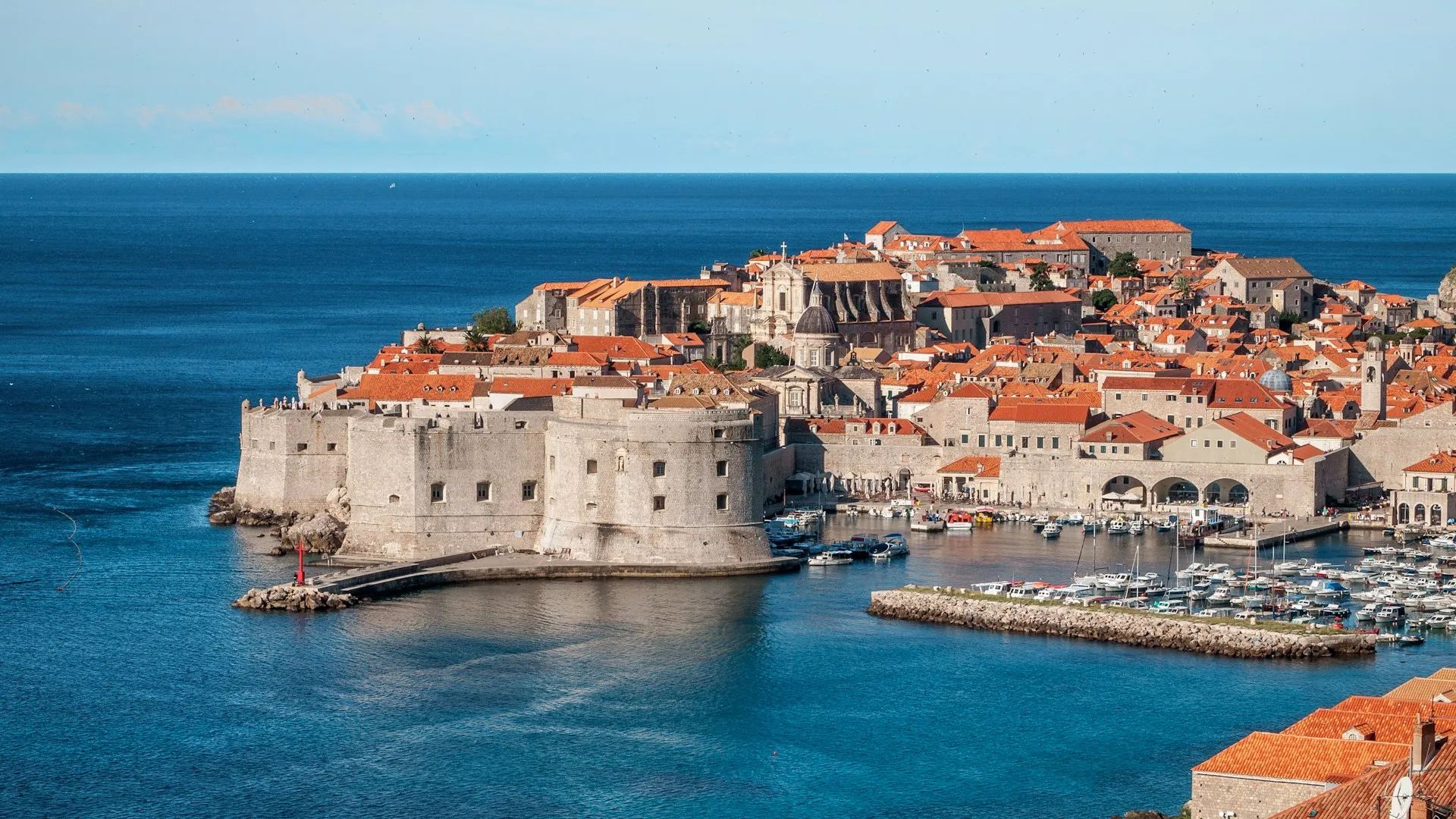
Enclosed by mighty medieval walls above the Adriatic, Dubrovnik is one of the Mediterranean's most beautiful cities. Beyond its limestone streets lie quiet coastal villages, the wooded Elaphiti Islands and the vineyards of Pelješac, all within easy reach by private boat or car.
Few cities announce themselves as dramatically as Dubrovnik. Its walls, almost two kilometres of fortifications raised and strengthened between the Middle Ages and the seventeenth century, wrap around an Old Town of polished limestone streets, baroque churches and Renaissance palaces, a UNESCO World Heritage Site since 1979. For centuries this was the seat of the Republic of Ragusa, a maritime power that thrived on diplomacy and trade, and its confidence is still written into the Stradun, the Rector's Palace and the forts that guard the harbour.
The best way to experience Dubrovnik is to live slightly apart from it. Mornings can begin with a walk on the walls before the city wakes, followed by a swim off the rocks below Ploče or a boat to Lokrum, the wooded island facing the Old Port. Afternoons drift towards the Elaphiti Islands, where Lopud and Šipan keep a slower pace, and evenings return to the city for dinner beneath the fortresses as the stone turns gold.
The coast on either side of the city adds depth to a stay. To the north-west, the Dubrovnik Riviera unfolds past the Renaissance arboretum of Trsteno, sheltered bays and the village of Slano; further on, the Pelješac peninsula produces some of Croatia's finest red wines and the celebrated oysters of Ston. To the south, Cavtat and the green valley of Konavle offer harbourside dining and family wineries, while the Bay of Kotor in Montenegro makes an easy day away.
Our properties
- Villa Slano: A private pool and sea-view terrace near Dubrovnik, a short walk from Karmelska beach
Areas
- Old Town: The walled historic centre, with the Stradun, palaces, churches and lanes of polished limestone; pedestrian, atmospheric and at its most magical early and late in the day.
- Ploče: Just east of the walls, an elegant hillside quarter with views back over the Old Port, swimming spots below the cliffs and an easy walk into the city.
- Lapad: A leafy peninsula to the west with a seafront promenade, pine-shaded coves and a calmer, residential feel, a short drive from the Old Town.
- Cavtat: A graceful harbour town south of Dubrovnik, close to the airport, with a palm-lined waterfront, quiet swimming bays and regular boats to the city.
Getting there
Dubrovnik Airport lies at Čilipi, about 20 kilometres south-east of the city; a private transfer reaches the Old Town in around 30 minutes, Cavtat in about 10 and Slano in roughly an hour. The airport has direct flights from many European cities, particularly between April and October, and year-round connections via Zagreb and other hubs. Private jets are welcomed, and helicopter transfers can be arranged to reach the Riviera or the islands.
By road, Dubrovnik is about three hours from Split. Since the opening of the Pelješac Bridge in 2022, the drive no longer needs to cross the short stretch of Bosnia and Herzegovina at Neum. For a more memorable approach, a private boat from Split along the coast and islands turns the arrival into an excursion of its own.
Within the city, the Old Town is pedestrian and much of it is reached by steps, so a driver who can drop you at the Pile or Ploče gates is invaluable. Parking near the walls is very limited, and traffic builds in summer when cruise ships are in port.
Good to know
Croatia uses the euro and has been part of the Schengen area since 2023. The Dubrovnik Pass gives access to the city walls, several museums and local buses, and the walls open early in the morning, which is the best time to walk them. The Old Town is busiest in the middle of the day when cruise passengers arrive; early mornings and evenings are calmer and more atmospheric. Beaches are mostly pebble or rock, so water shoes are useful. The Dubrovnik Summer Festival fills the city's squares and forts with theatre and music from 10 July to 25 August, and on 3 February the city celebrates its patron saint, St Blaise. Modest dress is expected in churches and monasteries, and walking the Old Town streets in swimwear or bare-chested is not permitted.
Frequently asked questions
How are airport transfers handled?
We arrange chauffeured transfers from Dubrovnik Airport, around 30 minutes from the Old Town, as well as private boat or helicopter transfers to the Riviera and the islands. Your driver will meet you on arrival and can remain at your disposal throughout the stay.
What can the concierge organise?
Our team can reserve restaurants, charter private boats, arrange guides for the Old Town and the Bay of Kotor, book in-villa chefs and wine tastings, and handle any request during your stay.
Can you arrange exclusive experiences?
Yes. We can plan a private walk on the walls with an expert historian, a yacht day around the Elaphiti Islands, an oyster tasting by boat in Mali Ston or a private dinner prepared at your villa, according to availability.
How do you protect our privacy?
Discretion is central to how we work. Your details are shared only with those directly involved in your stay, arrivals and services are arranged discreetly, and our team is accustomed to welcoming guests who value confidentiality.
When should we book for July and August?
Summer weeks, particularly July and August, are reserved well in advance. We recommend enquiring six to twelve months ahead, and earlier still for large groups or for dates during the Summer Festival.
When is the best time to avoid crowds in the Old Town?
Visit early in the morning or in the evening, once cruise passengers have left. May, June, September and October combine warm weather with a noticeably calmer city.
Can we combine Dubrovnik with Montenegro or the islands?
Easily. The Bay of Kotor is around two hours away by car, with passports needed at the border, and the Elaphiti Islands, Mljet and Korčula are reachable by private boat, so day trips are simple from a base on the coast.